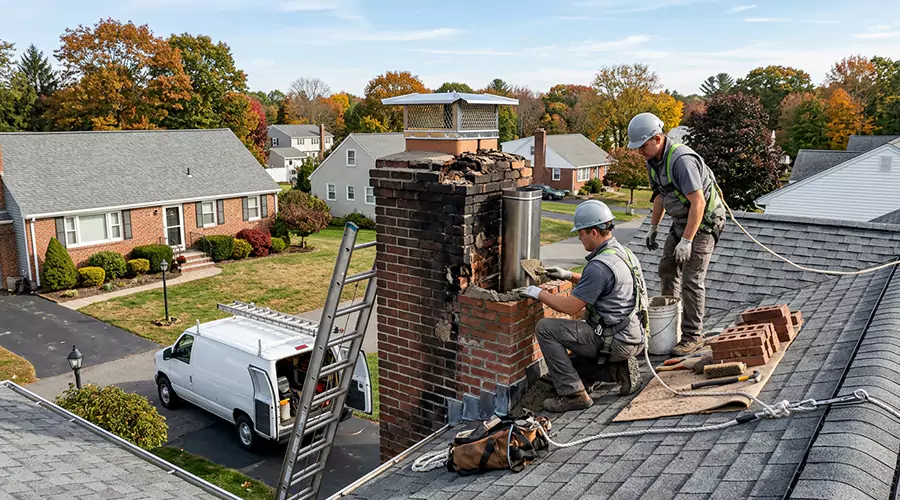
What Does Chimney Fire Repair Involve
Discover what to expect after a chimney fire, including hidden flue damage, repair options, factory-built systems, insurance considerations, costs, and safe fireplace reuse.




Based on 500+ Reviews

Proudly American
Owned & Operated

Chimney fire repair begins with stopping use of the fireplace or stove until the chimney has been professionally swept and evaluated. A chimney fire can crack clay flue tiles, damage mortar joints, warp metal components, weaken the liner, and sometimes affect the outer masonry. The actual repair may range from replacing a few damaged flue sections to installing a new liner or rebuilding part of the chimney. Professional chimney repair can address these issues and restore the chimney's structural integrity and safe operation.
The first step is not immediate reconstruction. The chimney usually needs to be cleaned so soot and creosote do not hide damage. After cleaning, an internal video inspection can examine the flue from top to bottom.
A camera inspection is important because chimney-fire damage may be hidden from normal views at the fireplace opening or chimney top. The inspection checks clay tiles for cracks, mortar joints for failure, and metal systems for separation, fatigue, warping, buckling, or open seams.
Chimney fires can expose the venting system to extreme heat. In masonry chimneys, rapid heating may crack clay tiles, displace mortar, damage liners, or affect surrounding masonry. Factory-built metal systems can suffer distortion or joint failure.
| Damaged Area | Possible Fire Damage | Typical Repair |
|---|---|---|
| Clay flue tiles | Cracks or missing sections | Tile repair or relining |
| Mortar joints | Gaps or failed joints | Refractory repair |
| Metal liner | Warping or open seams | Liner replacement |
| Outer masonry | Cracking or displacement | Masonry repair or rebuild |
| Chimney cap | Heat distortion | Repair or replacement |
| Factory-built chimney | Heat damage to listed components | Component or system replacement |
No. The extent of damage determines the repair.
A few damaged clay tiles may sometimes be repaired individually when the rest of the liner remains sound. More widespread cracking can make relining the safer and more practical option.
Chimney liner replacement cost can range from roughly $625 to $7,000 depending on the liner type and severity of damage.
A liner may be recommended when:
The chimney should not be returned to service until the repaired or replaced liner can safely contain combustion products.
A chimney fire can sometimes damage more than the liner.
Exterior masonry cracks, displaced brick, or damaged mortar may indicate that heat affected the chimney structure. Localized masonry defects may be repaired with brick replacement or repointing.
More serious structural damage can require partial rebuilding. Current 2026 pricing places major chimney repairs around $1,000 to $7,000, while extensive rebuilds or full replacement may range from about $4,000 to $15,000.
Chimney rebuild cost depends on how much of the structure must be dismantled and rebuilt.
Factory-built metal chimney systems are different from masonry chimneys.
If a listed factory-built chimney is damaged by a chimney fire, the damaged system or affected listed components may need replacement rather than patching. Heat can cause warping, buckling, joint separation, or open seams that prevent the system from containing combustion gases properly.
There is no single fixed price because fire damage can range from limited flue repair to complete reconstruction.
| Repair Level | Typical 2026 Cost |
|---|---|
| Minor chimney repair | $200 to $850 |
| Moderate repair | $500 to $2,500 |
| Major repair or liner work | $1,000 to $7,000 |
| Roofline-up rebuild | $1,000 to $3,500 |
| Full chimney rebuild or replacement | $4,000 to $15,000 |
A homeowner can look for obvious warning signs from a safe location, but a visual check cannot confirm that the flue is undamaged.
Possible signs include:
Do not climb onto the roof or light another fire to test the chimney.
The fireplace or stove should remain unused until the chimney has been swept, evaluated, repaired as necessary, and cleared for service.
The fire department's role during a chimney fire is to control and suppress the fire. That response does not replace a chimney cleaning and internal evaluation afterward.
Coverage depends on the policy and circumstances.
When damage is found, detailed photographs, inspection findings, and a written repair estimate can help document the condition. It is useful to preserve evidence before repairs alter the damaged areas.
Creosote control is central to prevention. Chimney fires commonly involve combustible deposits inside the flue.
Annual inspection helps identify buildup, venting problems, and damaged components before they become more serious. Current guidance recommends inspecting chimneys, fireplaces, and vents at least annually and cleaning or repairing them when necessary.
Burn dry, seasoned wood and avoid long, smoky fires that encourage creosote accumulation.
Post-fire chimney work involves much more than patching a visible crack. The chimney should first be taken out of service, swept, and examined internally. Repairs may then include flue-tile replacement, refractory joint repair, relining, masonry restoration, metal-component replacement, or partial rebuilding.
The amount of work depends entirely on what the inspection finds. A chimney that looks normal from the outside can still have hidden liner or joint damage, so professional evaluation should come before the fireplace is used again.
No. Even a fire that appears minor can leave hidden cracks, failed joints, or metal damage. The chimney should be swept and evaluated before reuse.
Not always, but clay tiles can crack from thermal shock and metal components can warp or separate under high heat.
Yes. Isolated damage may sometimes be repaired, while widespread cracking can require a new liner.
An internal video inspection is used to examine flue tiles, mortar joints, and metal components throughout the chimney.
Not always. Rebuilding is generally reserved for significant masonry or structural damage that cannot be corrected with localized repairs.
Discover what to expect after a chimney fire, including hidden flue damage, repair options, factory-built systems, insurance considerations, costs, and safe fireplace reuse.
